
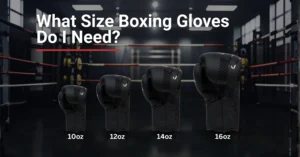
What Size Boxing Gloves Do I Need? — The Complete Answer
What size boxing gloves do I need?
It sounds like a simple question. But if you have spent more than five minutes searching for an answer, you already know it is not. You get different numbers from different sources, confusing oz explanations, and size charts that contradict each other.
So here is the complete, honest answer — covering boxing gloves weight, oz sizes, body weight matching, training type, and every specific situation you might be in. After reading this you will know what size boxing gloves you need for your exact situation — and why.
First — What Does “Size” Actually Mean in Boxing Gloves?
This is where most beginners get confused. Boxing gloves size refers to the weight of the glove in ounces — not the physical dimensions of the glove like shoe sizes.
When you see 10 oz boxing gloves, 12 oz boxing gloves, 14 oz boxing gloves, or 16 oz boxing gloves — that number tells you how heavy the glove is. And heavier means more padding.
So when someone asks what size boxing gloves do I need — they are really asking: how much padding do I need for my training?
The answer depends on three things:
- Your body weight
- What you are training for
- Who you are training with
Size Chart to Make Sure What Size Boxing Gloves Do I Need?
This is the most referenced boxing gloves size chart used across professional training gyms. Use your body weight as the starting point — then adjust based on your training type below.
| Glove Weight | Your Body Weight | Primary Use |
|---|---|---|
| 8 oz | Under 100 lbs | Competition only, youth fighters |
| 10 oz | 100–130 lbs | Bag work, pad work, speed training |
| 12 oz | 130–160 lbs | General training, fitness boxing, most women |
| 14 oz | 150–180 lbs | All-purpose training, light sparring |
| 16 oz | 180 lbs and above | Heavy sparring, larger build fighters |
| 18–20 oz | Any weight | Maximum protection sparring, rehabilitation |
Important: This chart is a starting point — not a rigid rule. Your training type and goals matter just as much as your body weight. Keep reading.
What Oz Boxing Gloves Should I Get — Based on What You Are Doing
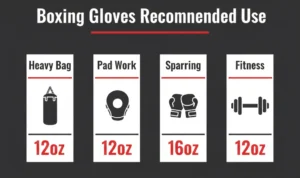
Body weight gets you to the right starting point. Training type tells you exactly what oz boxing gloves to choose within that range.
If You Are Doing Heavy Bag Work
Best boxing gloves for heavy bag work: 10 oz or 12 oz
The heavy bag does not move like a person and does not hit back. This means you need less protective padding between you and the bag — and lighter gloves give you better speed, feel, and feedback on your technique.
10 oz boxing gloves are ideal for lighter fighters and women doing bag work — fast, responsive, and light enough to train through full conditioning rounds without arm fatigue.
12 oz boxing gloves are the sweet spot for most people doing bag work — enough padding to protect your knuckles through hard sessions, light enough to maintain combination speed.
Going heavier than 14 oz on the bag is unnecessary and will slow your hands without adding meaningful protection. Save the extra padding for sparring.
If You Are Sparring
Best boxing gloves for sparring: 14 oz or 16 oz — always
Sparring size is the one area where you should never go lighter than your body weight chart suggests — and often go heavier.
14 oz boxing gloves are appropriate for fighters in the 150 to 180 lb range who are doing controlled technical sparring with an experienced partner.
16 oz boxing gloves are the standard for most adult sparring situations — they provide enough padding to protect your partner during harder exchanges and are required in most boxing gyms for open sparring.
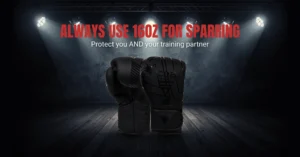
Going into sparring with 10 oz or 12 oz boxing gloves is dangerous — not for you, but for your training partner. The reduced padding on lighter gloves transfers significantly more force on every punch. Most gyms will not allow it.
If You Are Doing Fitness Boxing or Classes
Best boxing gloves for fitness training: 12 oz for most people
Fitness boxing classes — bag rounds, combination drills, conditioning circuits — sit between bag work and technical training. 12 oz boxing gloves handle everything in a fitness class comfortably:
- Light enough to maintain speed through conditioning rounds
- Padded enough to protect your hands on bag contact
- Versatile enough to work for pad rounds with an instructor
If you are a smaller woman under 130 lbs doing fitness classes only, 10 oz boxing gloves will feel more natural and less fatiguing on your arms.
If You Are Doing Muay Thai or Kickboxing
Best boxing gloves for Muay Thai and kickboxing: 12 oz or 14 oz
Muay Thai and kickboxing training uses boxing gloves for striking — same sizing rules apply as regular boxing training. The key difference is that clinch work in Muay Thai means your gloves contact your partner’s body and arms frequently, so 12 oz or 14 oz gives you appropriate padding for both striking and clinch exchanges.
12 oz for lighter fighters and technique-focused sessions. 14 oz for heavier fighters and sparring-intensity Muay Thai training.
What Size Boxing Gloves Do Women Need?
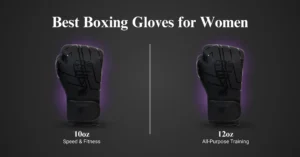
Boxing gloves for women follow the same oz-to-body-weight chart — but with one important addition: hand fit.
Many boxing gloves are designed around larger male hands. When a woman with smaller hands wears an oversized glove interior, it creates dead space inside the glove that reduces wrist alignment, control, and striking accuracy.
The right boxing gloves for women fit the hand without significant empty space in the finger channels. This is not just a comfort issue — a poorly fitting glove affects your technique and can actually increase wrist injury risk because your fist is not properly aligned inside the glove.
Women’s size recommendations:
| Activity | Recommended Size |
|---|---|
| Fitness boxing, bag work | 10 oz boxing gloves |
| General training, classes | 12 oz boxing gloves |
| Sparring | 14 oz boxing gloves |
| Heavy sparring | 16 oz boxing gloves |
Most women starting out find 12 oz boxing gloves the most versatile — usable for bag work, pad sessions, light sparring, and fitness classes without needing to switch.
The Oz Size Mistake That Injures Beginners
Here is the most dangerous mistake beginners make with boxing gloves size — and it has nothing to do with going too heavy.
Going too light for sparring.
When you are new, sparring feels exciting. You want to go in and test what you have been practicing. You use the same 10 oz or 12 oz boxing gloves you have been training on — because they are the only pair you own.
The problem is not your protection. It is your partner’s.
Lighter gloves deliver more force per strike because there is less padding absorbing impact. Your partner — who trusted that you would come in with appropriate protection — absorbs significantly harder shots than a properly padded 14 oz or 16 oz boxing gloves session would produce.
This is why most serious boxing gyms have a strict rule: 16 oz boxing gloves minimum for all open sparring, regardless of body weight.
If you are going to spar — even light technical sparring — buy a heavier pair specifically for that purpose. Your training partners will thank you, and your gym coach will respect you for it.
Can I Use One Pair for Everything?
This is the most practical question beginners ask — and the honest answer is: yes, with a compromise.
If budget only allows for one pair:
14 oz boxing gloves are the most versatile single-pair choice for most adults between 150 and 180 lbs. They are:
- Heavy enough for safe sparring
- Light enough for bag and pad work without excessive arm fatigue
- Appropriate for fitness classes and general training
The tradeoff is that 14 oz boxing gloves are slightly heavier than ideal for pure bag work — your hands will fatigue faster in longer conditioning rounds compared to using 12 oz boxing gloves. But they protect you and your partners in every training situation.
If you are under 150 lbs, 12 oz boxing gloves as your single-pair choice gives you better bag work performance — just communicate with your sparring partner and gym coach before using them in sparring.
How to Check If Boxing Gloves Actually Fit Properly
Knowing what size boxing gloves you need by oz is only half the equation. The physical fit inside the glove matters just as much.
The proper fit checklist:
Knuckle position: When you make a fist, your knuckles should align with the thickest part of the padding — not sitting above it or below it. Misaligned knuckles mean you are punching on thin padding areas.
Finger length: Your fingertips should reach close to the end of the finger channel without being cramped. Too much space means the glove is too large for your hand.
Thumb position: Your thumb should sit naturally in the thumb sleeve without straining. An attached thumb design keeps it locked safely in this position.
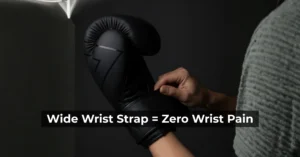
Wrist closure: When closed, the strap should wrap fully around your wrist and feel snug without cutting circulation. If the strap only covers half your wrist — the glove is probably too small or the strap is too narrow.
Fist test: Make a tight fist inside the closed glove. It should feel secure and supported — not loose and shifting.
Boxing Gloves Size vs Training Type — Quick Reference
| Training Type | Recommended Size | Why |
|---|---|---|
| Heavy bag work | 10 oz – 12 oz | Speed and feel over maximum padding |
| Pad work with trainer | 10 oz – 12 oz | Feedback and accuracy |
| Fitness boxing classes | 12 oz | Versatile and light enough for conditioning |
| Technical sparring | 14 oz | Protection for both fighters |
| Heavy sparring | 16 oz | Standard gym requirement |
| Muay Thai training | 12 oz – 14 oz | Clinch work needs appropriate coverage |
| Kickboxing classes | 12 oz | Same as fitness boxing |
| Competition | 8 oz – 10 oz | Regulated by competition rules |
What About Boxing Gloves Colors — Does It Affect Size?
No — black boxing gloves, red boxing gloves, blue boxing gloves, and gold boxing gloves all come in the same oz sizes and deliver identical protection when the construction is the same.
Color is personal preference. The practical consideration is:
Black boxing gloves — most versatile, matches any gym gear, professional look Red boxing gloves — bold and energetic, one of the most popular choices Blue boxing gloves — cool and distinctive, popular with women and younger fighters Gold boxing gloves — standout premium look, zero competition from other gym members
Whatever color you choose — make sure the oz size matches your training type first. Color should always be the last decision.
Final Answer — What Size Boxing Gloves Do You Need?
Use this decision tree:
Your weight under 130 lbs?
→ Start at 10 oz
→ Sparring? Go to 14 oz

Your weight 130–160 lbs?
→ Start at 12 oz
→ Sparring? Go to 16 oz

Your weight 160–180 lbs?
→ Start at 14 oz
→ Heavy sparring? Go to 16 oz

Your weight above 180 lbs?
→ Start at 16 oz
→ Always 16 oz for sparring
One pair only? Choose 14 oz — works safely across all training types for most adults.
Two pairs? 12 oz for bag and pad work, 16 oz for sparring. This is the setup most serious training gyms recommend.
Ready to Get the Right Size?
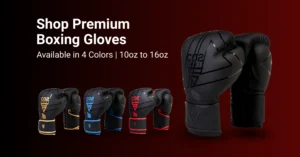
The Titan Series boxing gloves are available in 10oz, 12oz, 14oz, and 16oz — in black, red, blue, and gold — so you can get the exact size for your training type and the color that matches your style.
Built with multi-layer foam padding, vegan mat skin leather, breathable mesh palm, and wide hook-and-loop wrist support — the right size in the right glove makes every training session safer and more effective.
Shop Titan Series Boxing Gloves — 4 Sizes, 4 Colors →
Before your first session — also read:
- Best Boxing Gloves for Beginners → — what to look for before buying
- How to Clean Boxing Gloves → — keep your gloves fresh and lasting longer
For official competition size regulations visit USA Boxing.
Pingback: How to Clean Boxing Gloves | 5 Easy Steps at Home